Committed - daily goal consistency designing a minimalist productivity app built around habit streaks and accountability
Role
Duration
Team
Platform
Key Metric 1
Unified dashboard for tasks, habits, and long-term goals
Key Metric 2
Accountability system built into the core loop
Key Metric 3
UI designed to reduce friction, not add features
Summary
Overview
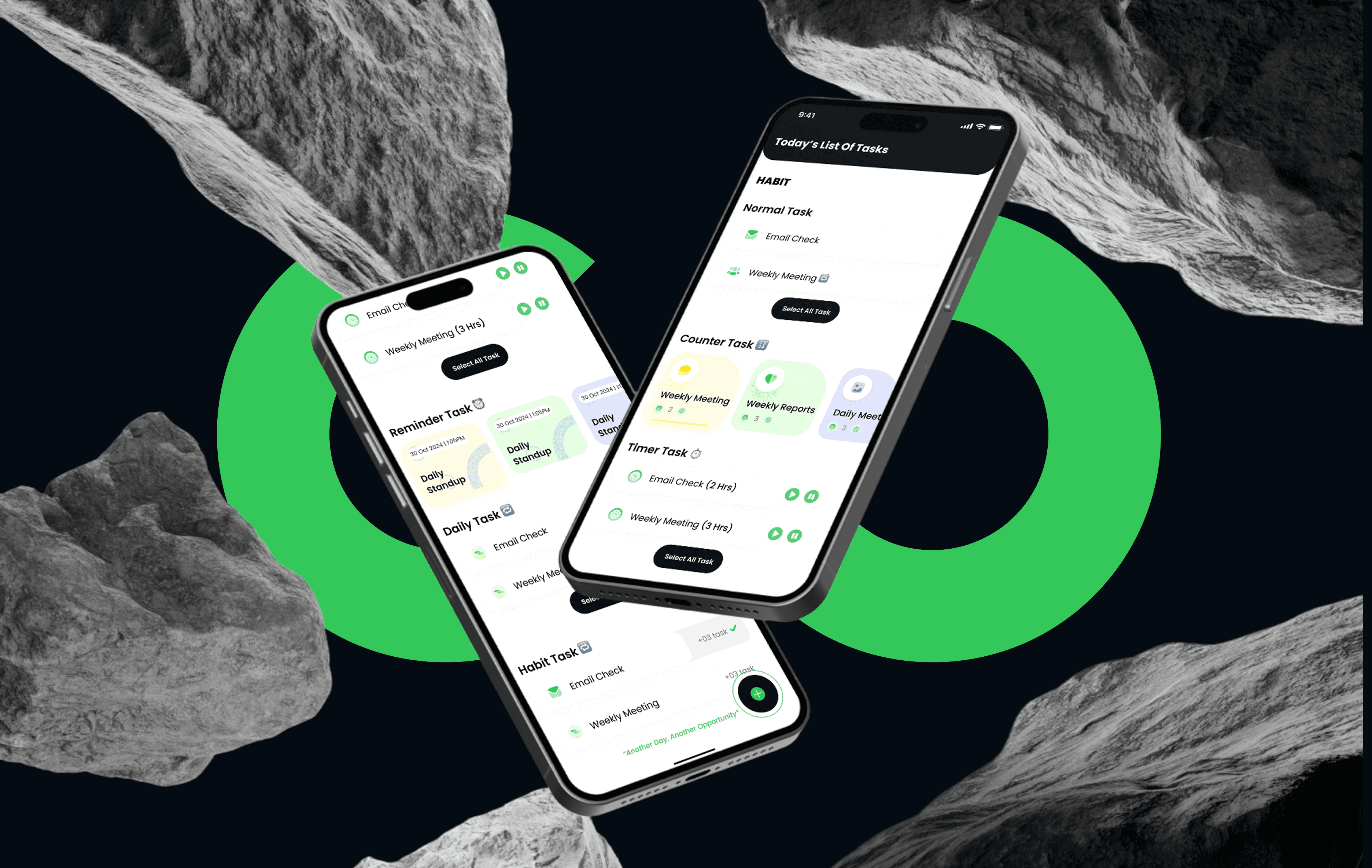
Committed is a productivity app for people who already know what they want to achieve, they just keep not doing it. Committed Pvt. Ltd. wanted a tool that addressed the real problem: not planning, but follow-through. I designed the full mobile experience around a structured daily workflow, task prioritisation, habit tracking, and streak-based accountability, wrapped in a minimalist UI that stays out of the way and lets the system do the work.
Most productivity apps help you plan. Committed was designed to make you actually do it.
Problem Framing
The Core Problem
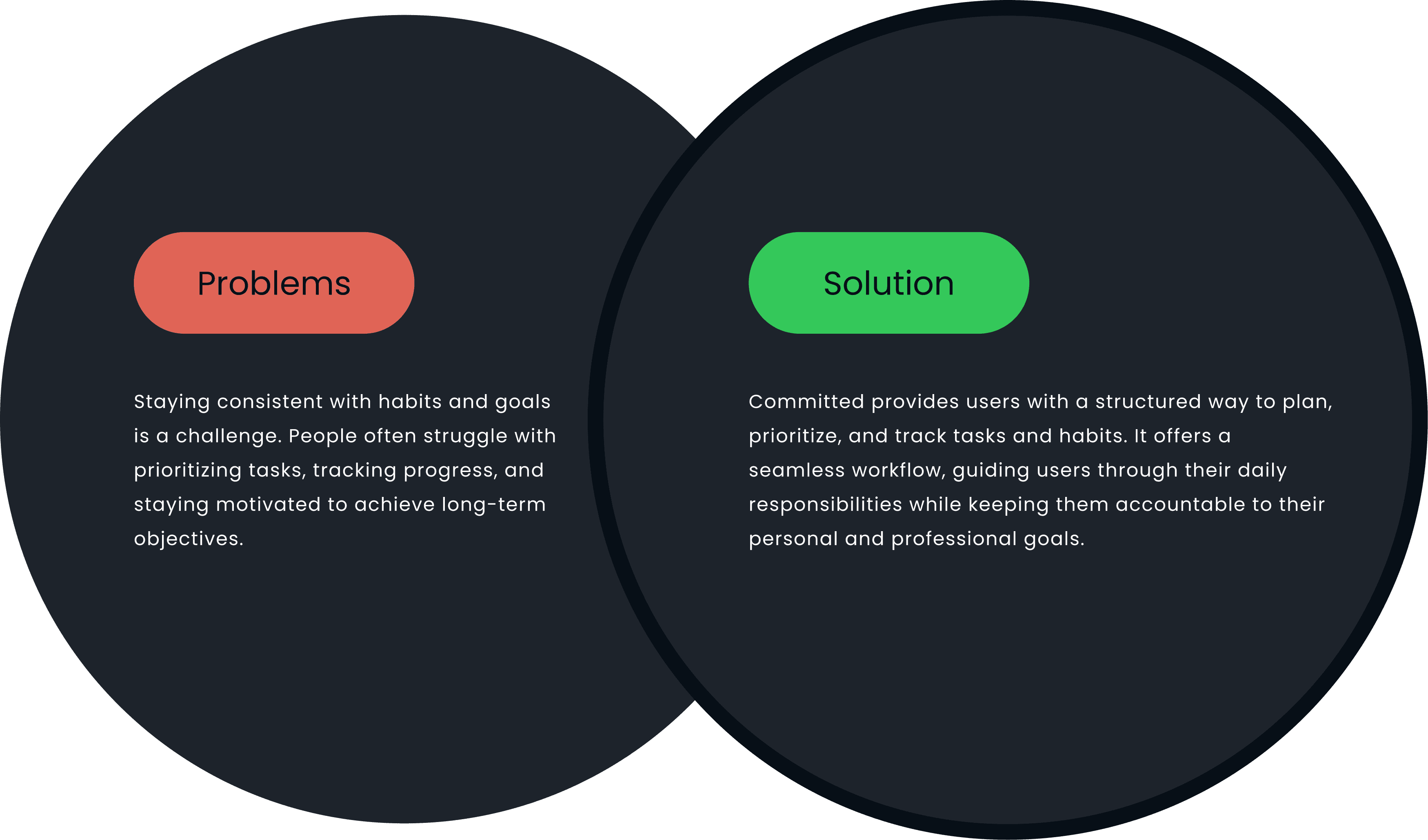
People don't fail at their goals because they can't set them. They fail because nothing holds them to the daily actions that get them there. Habit tracking apps track. Task managers list. Neither creates the accountability loop that makes consistent follow-through feel real and worth protecting.
Why it mattered
The productivity app market is saturated, but most apps in it solve the wrong problem. They make planning feel productive without making progress feel tangible. Committed Pvt. Ltd. needed a product that sat on the other side of that gap: less about organising intention, more about building the daily discipline that turns intention into outcome.
Supporting data / evidence
The brief identified two specific failure modes from user research, people struggling to prioritise tasks meaningfully, and motivation collapsing over time without visible progress markers. Both are well-documented patterns in habit science: prioritisation paralysis kills the start, and invisible progress kills the middle. The design addressed both directly rather than building around them.
Role & Team
My Role
I handled the complete design scope, problem framing, UX logic, design system, typography and color, and all final UI screens. I also defined the streak and accountability mechanic as a design layer, not just a feature, it needed to feel motivating without feeling punishing, which required deliberate decisions about how progress and gaps were visually communicated.
Team Composition
Solo designer. Committed Pvt. Ltd. provided the product brief, industry context, and feedback throughout the design process.
Stakeholders & decision-makers
Committed Pvt. Ltd.'s product leadership. Key design decisions around the streak system, task dashboard, and visual tone were reviewed directly with the client before finalisation.
Approach
Strategy & framework
The design strategy started with one constraint, every screen had to have a single, clear job. Committed is a minimalist app by definition, and minimalism in productivity tools isn't an aesthetic choice, it's a functional one. Every element that doesn't directly support the user's next action is an obstacle. I mapped the core user loop first, plan, act, track, repeat, and only added UI elements that served one of those four stages explicitly.
Research methods used
Problem definition through user behavior analysis of existing productivity app failure patterns. Brief-led research into the two core pain points, task prioritisation and long-term motivation. Habit and accountability mechanic research to inform the streak system design. Competitive review of minimalist productivity apps to identify where the category was underserving users.
Key insight(s)
The streak is the product. Not the task list, not the habit tracker, the streak. Once I understood that the core value of Committed wasn't the planning interface but the daily return behaviour it was designed to create, every other design decision became cleaner. The UI needed to protect the streak psychologically, make it feel worth maintaining, and make breaking it feel like a real loss worth avoiding.
Challenges
Primary challenge
Designing accountability without designing anxiety. Streak-based systems have a well-known dark side, they shift from motivating to punishing the moment a user misses a day, and once the streak breaks, many users disengage entirely rather than restart. The design had to make consistency feel rewarding without making imperfection feel like failure.
How I navigated it
The visual language of the streak system was calibrated deliberately, green (#34C85A) on a dark background (#070F17) for active progress states, with no red failure states in the core flow. Progress is shown, not absence. The UI celebrates what's been done rather than highlighting what hasn't. That distinction in visual framing changes how users relate to a missed day, it becomes a gap in an otherwise visible record, not a reset to zero.
What I Did differently
I'd build and test a streak recovery mechanic earlier in the process. What happens on day two after a missed day is the highest-stakes moment in any habit app, and designing that re-entry experience with the same care as the onboarding would reduce the churn that typically follows a first streak break.
Solution
What I designed
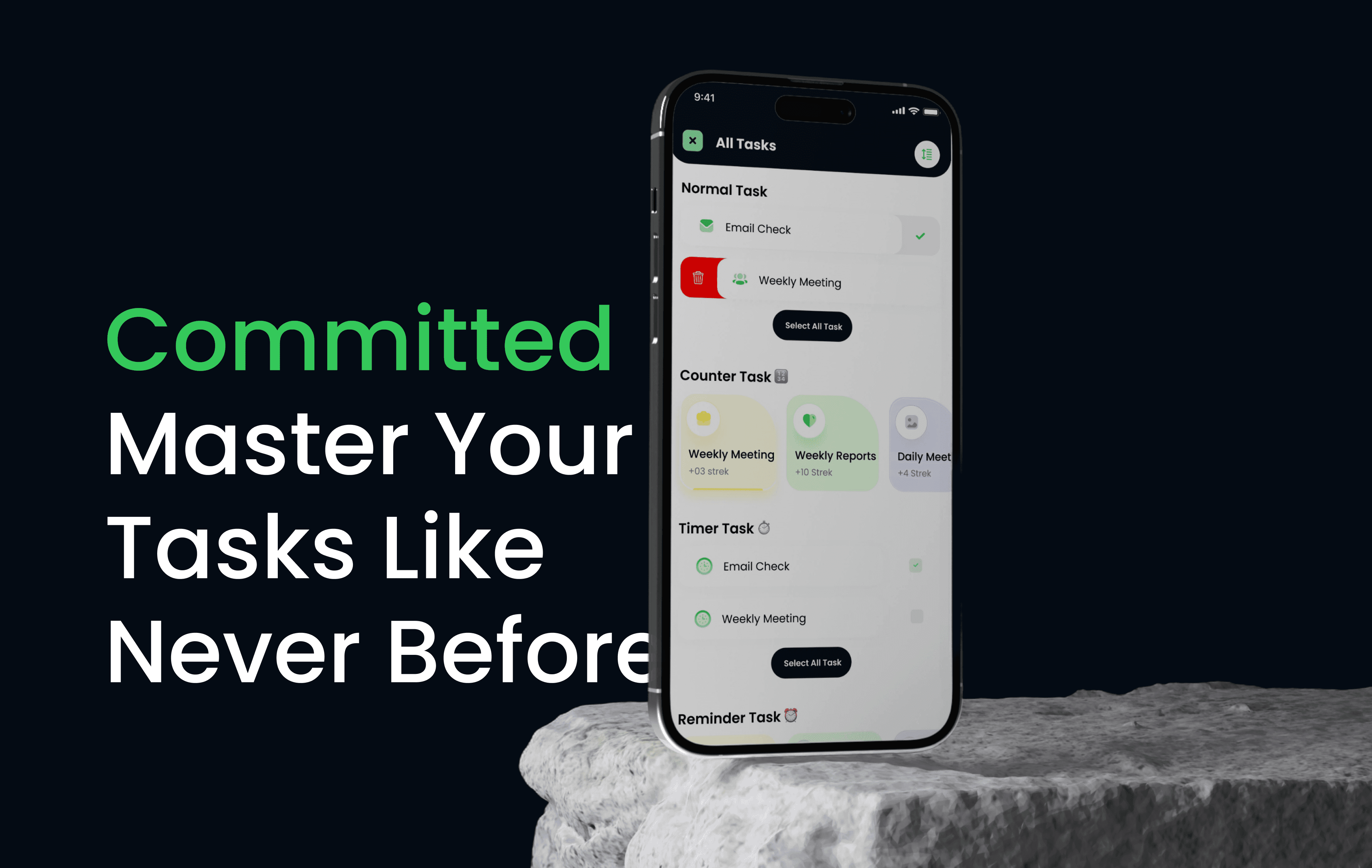
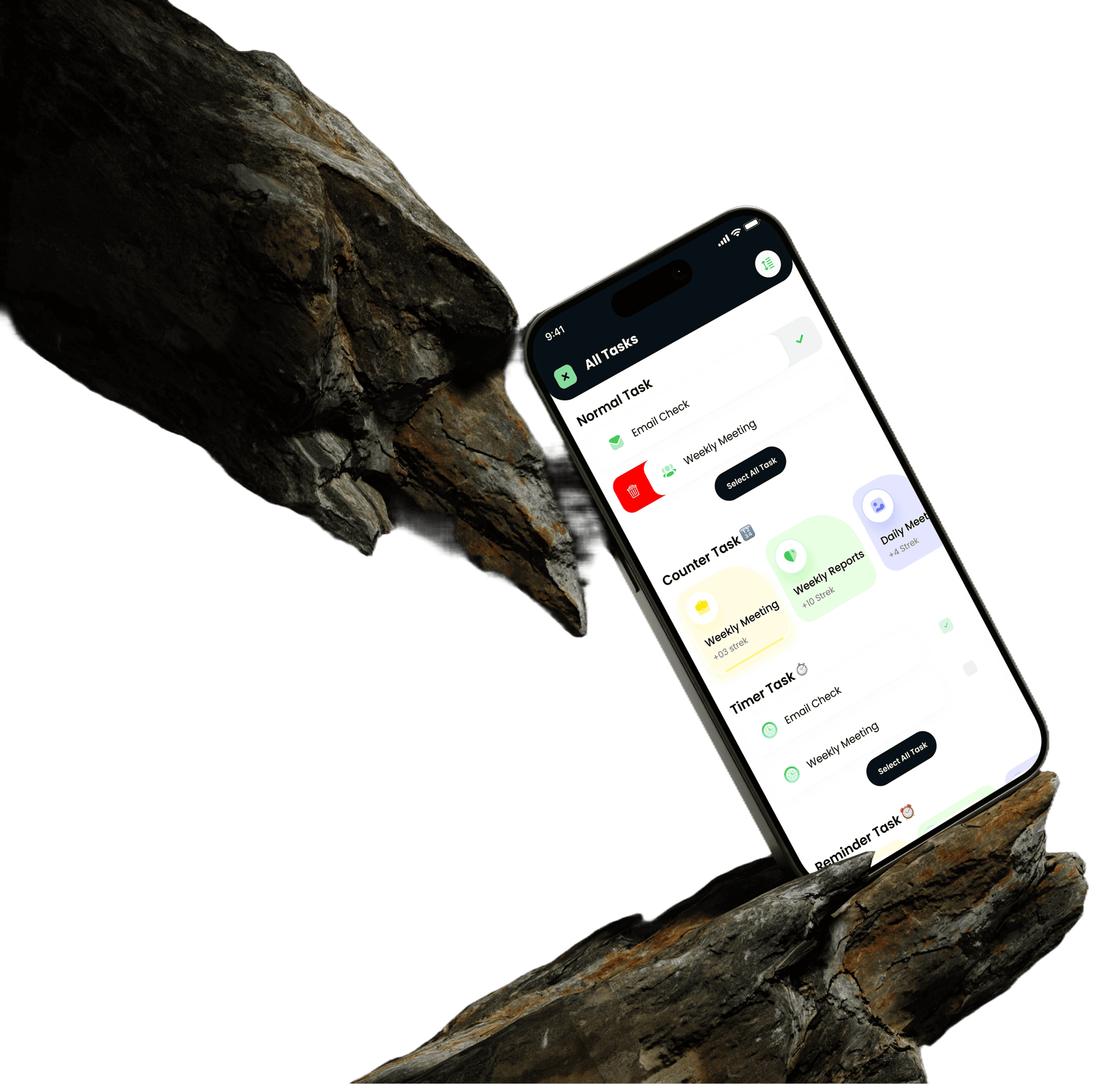
A minimalist mobile productivity app with three interconnected modules, a unified task dashboard, a habit tracking system with streak visibility, and a progress overview that keeps long-term goals in frame while managing daily actions. The design system runs on Poppins across all text weights, a four-color palette of green, white, and two dark tones, and a layout logic that keeps every screen focused on one decision at a time.
Key design decisions
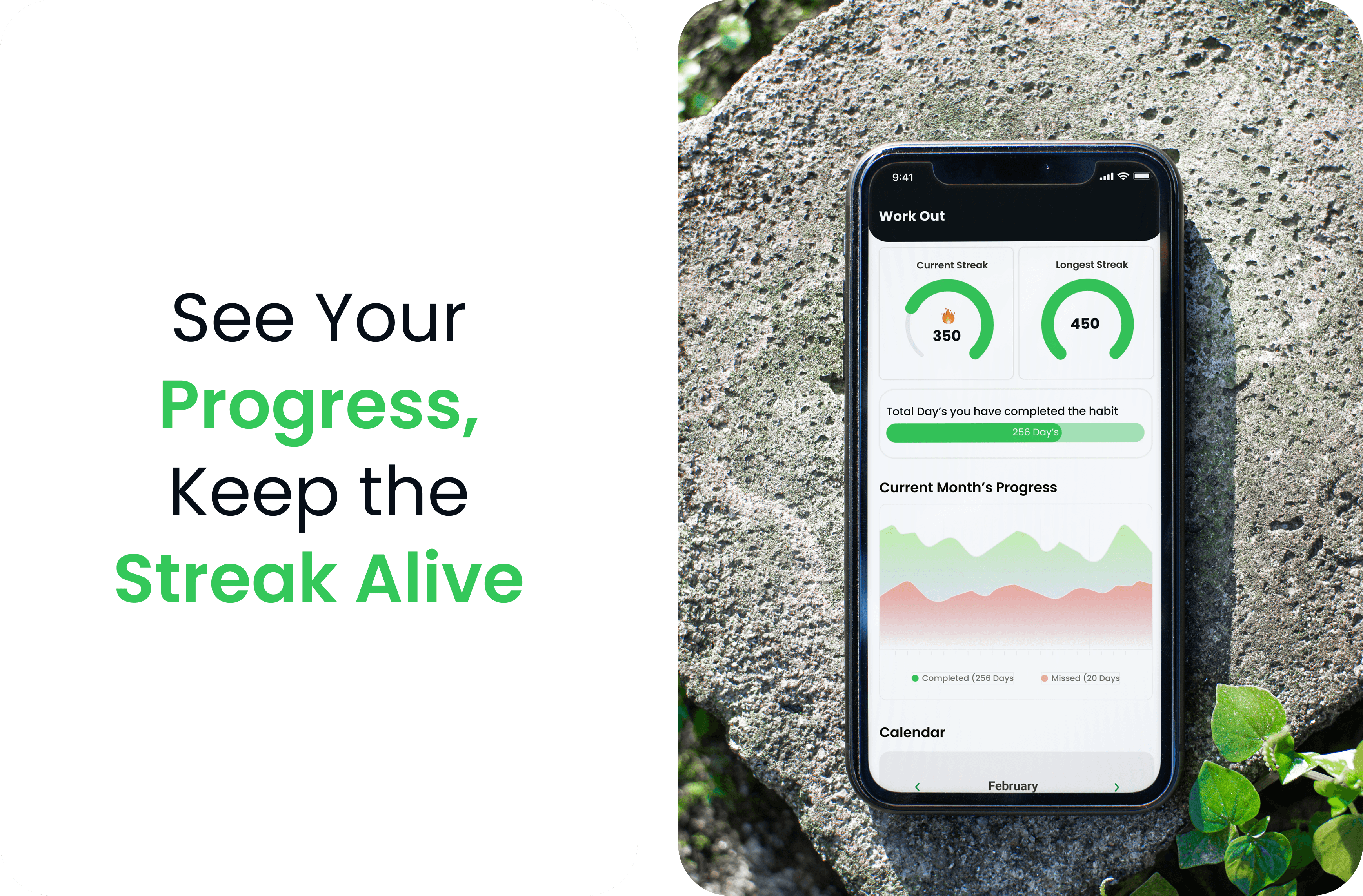
1. One place for all tasks, no category switching. The dashboard surfaces personal and professional tasks in a single unified view, organised by priority rather than type. Switching between contexts is one of the main reasons people abandon productivity apps mid-session, removing that context switch keeps the user in the flow. 2. Streak visibility as the primary progress signal. Rather than burying streak data in a stats page, streak progress is surfaced as a primary UI element. Seeing the streak actively updates the user's relationship with the day's tasks, it reframes "do I feel like doing this" as "do I want to break the streak." 3. Dark-first UI for focus. The dark background (#070F17, #1D232B) with green accents wasn't a style choice, it was a focus choice. Dark interfaces reduce visual noise and make the content that matters, the tasks and progress indicators, stand out without competition. It also signals that this is a tool for serious daily use, not a casual app.
Results & Impact
Quantitative results
Three core productivity failure modes addressed in one app, prioritisation paralysis, progress invisibility, and motivation drop-off. Full design system delivered including typeface, color palette, and component library. Streak and accountability layer designed as a core product mechanic, not a surface feature.
Qualitative outcomes
The minimalist approach resolved the most common complaint about productivity apps, too many features creating the illusion of productivity without the reality of it. The unified task dashboard removed the context-switching friction that breaks daily routines. The streak system gave users a tangible, daily reason to return that didn't depend on motivation alone.
Business impact
Committed Pvt. Ltd. now has a product positioned clearly in a crowded market, not as another feature-heavy productivity tool, but as the app for people who've tried other apps and still aren't following through. That positioning is both a design statement and a market differentiation, and the minimalist UI makes it credible at first glance.
Next Steps
What's next (and why)
The accountability system currently works at the individual level. The logical next phase is social accountability, shared goals, visible streaks between friends or colleagues, and challenge structures that make the daily commitment feel connected to other people's progress. That layer exists in the FitWave playbook and it's the highest-retention mechanic in consumer habit apps.
Open questions / hypotheses
Does streak visibility actually change daily return behaviour, or do users glance at it and move on? Post-launch session data would answer that quickly. And does the unified task dashboard work equally well for users with very different task volumes, someone managing three priorities versus someone managing thirty?
Learnings
Committed sharpened my instinct for restraint. Every feature I considered adding had a reason to exist, and I cut most of them anyway, because in a minimalist productivity tool, the cost of an extra feature isn't just screen space, it's cognitive load on the exact moment a user needs to be deciding what to do next. Saying no to features is a design skill. This project made me better at it.